


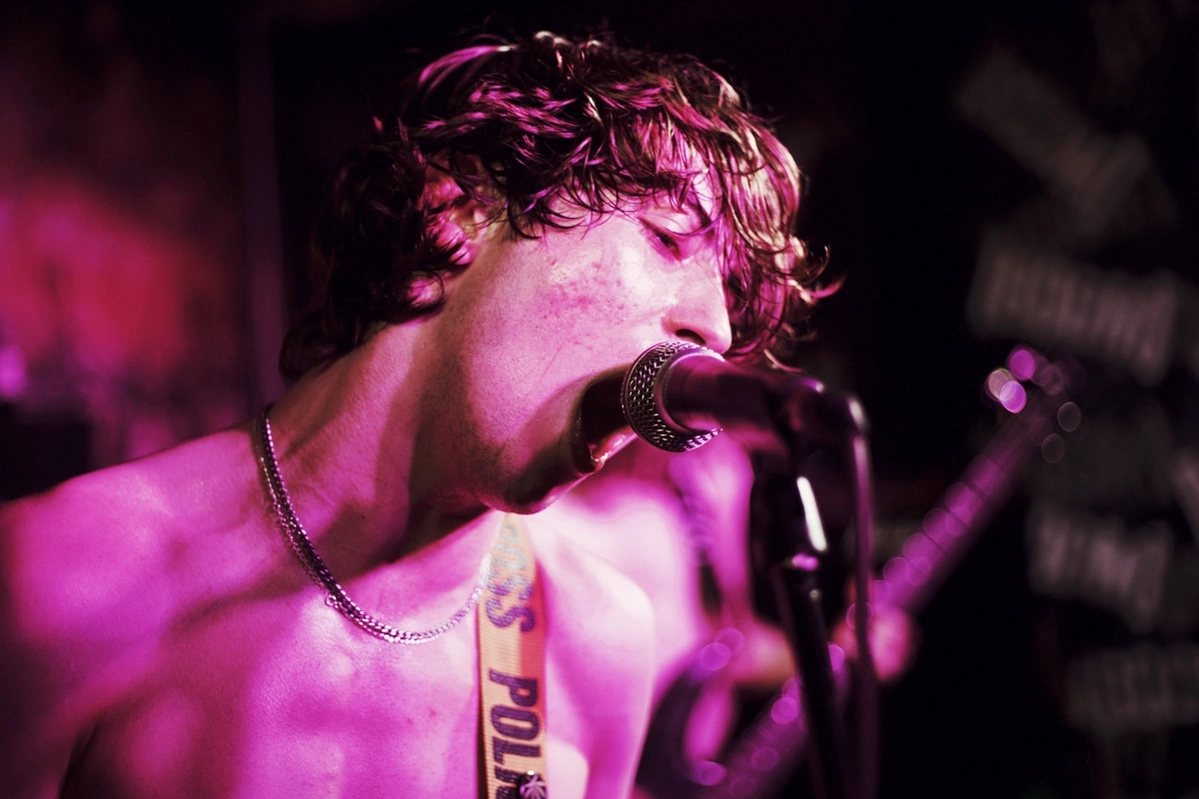
I’ve often said to people, “you have to be a bit crazy to do gig photography!” And during my time in this work I’ve acquired quite a few dramatic tales. There’s more running involved than you think. Last year at a music festival one act came on half an hour early, and I had to sprint across the field from the drink stands to get to the photo pit in time to shoot during my one song slot.

Making do in the pit
One story I love to tell is shooting a global artist’s show at a huge arena. I was geared up with both my trusty 24-70mm and the magnificent 70-200mm, but could only pick one as us photographers were instructed by the venue staff to leave all other belongings backstage as we entered the pit. The seats were packed, my heart was in my mouth, and we were all getting ready for the artist’s imminent appearance. One minute before the concert started, a venue staff member informed us that we should be stationed at the mixers, which is miles away from where we were. I realised my only hope was the 70-200mm - which I left backstage. What next ensued was a sprint not dissimilar from a dramatic movie scene to scramble with my lenses, and run back into the arena, now not being able to see where exactly the other photographers had been instructed to go. All was well however, as I spotted a few tiny lights at the back of the crowd where the soundboards were set up, and rushed to take my spot at the correct photo taking station.
It ended up being quite a nice opportunity to get some shots encompassing the whole scene: the artist, the massive stage, and the audience in the foreground of the frame. I learnt that day that sometimes you just have to make do, and the final product can still be something you’re proud of.
The realities of the job
The industry is highly competitive due to an oversaturation of photographers, often being paid little or nothing, and it can be stressful at times. Often you receive confirmation for gigs a day before, and rushing down from Leeds to London and back just to capture those first three songs is quite the norm. There’s also many challenges to consider; a two metre-high stage is great for the audience’s view, but not ours. At bigger arenas I’ve occasionally thrown on a heeled boot for the height boost; at smaller venues, however, I stick with comfortable, flat shoes, as there’s no benefit to being taller when the musicians are right in front of you. Sometimes a lower angle can be advantageous for more dynamic shots - sometimes not.
Settings, light and grain
Lighting can make or break a photo no matter how good the photographer, so it really is a gamble at every show whether you’ll have a breeze or not. But some things are standard with each gig: an aperture no smaller than f/2.8, a shutter speed 1/250 or faster, and whatever ISO you dare to touch. Of course, at gigs where the lighting is murky, or there’s too much fog, everything becomes about grain, grain, grain. You need to make some compromises, and sometimes a bit of noise can give an image that nice gritty touch, but if it’s too excessive it may need to be reduced in post.

When it comes together
When you get good at it though, it shows. Personally, my absolute favourite genre of music to shoot is K-pop. Every song is matched with a swift and elaborate routine, in which these trained singers are absolutely perfect at synchronising. The charisma matches that of a passionate rock band, and sometimes they’re borderline acting with the expressions they give us on stage. It’s an absolute gift to the concert photographer. When the lighting is on point, and the spotlights beam down behind the sculpture-like formations of the group, every shot is like a painting.
To capture a musician in their height of passion is one of the most precious things you can do as a photographer. Whether it’s a guitarist lost in their solo, a group performing some intense choreography, or a glassy eyed singer pouring out their soul beneath the stage lights, timing that shot is paramount. Often I keep my finger on the shutter set to high-speed continuous so I can get the perfect shot amongst others, resulting in at least 1000 images to sift through later on. It’s worth it though; when you’ve spent ten minutes carefully looking through each one and you finally find that golden shot, it’s everything.
In short, concert photography isn’t just point-and-shoot; it involves immense preparation, quick-thinking, awareness of surroundings, and a good eye. And, occasionally, you’ll find yourself running like your life depends on it.

A note from Dock Street Studio
Everything Maddie describes — one chance at the frame, no second take, light you don’t control — is the discipline behind the event photography we shoot across Leeds, from conferences and launches to awards nights and gigs. Our write-up of Leeds Festival shows the same approach from the pit. And if you are a musician who needs images between shows, creative headshots for musicians covers what to plan for in the studio.
Frequently Asked Questions
What camera settings work for gig photography?
As a starting point: aperture no smaller than f/2.8, shutter at 1/250 or faster, and ISO as high as the venue forces you. Then adjust for the light in front of you. Fog and murky stages mean grain, and a little of it is fine.
Do you photograph gigs and live events?
Yes. Event photography covers live music, launches, conferences and awards. Tell us the venue, the running order and what the images are for.
Can a band get studio portraits as well?
Headshot sessions start at £95 for individuals. For a whole band, a half-day commercial booking from £450 gives time for individual and group frames, editing included.
Where is the studio and how do I book?
Dock Street Studio, Unit 9, 30–38 Dock Street, Leeds LS10 1JF — central Leeds near Leeds Dock, a short walk from the train station, with parking on site. Book online or call to talk the brief through first.
Book event photography in Leeds
Send us the date, the venue and what the images need to do, and we will tell you honestly what the day needs. Book online, email hello@dockstreetstudioleeds.co.uk, or call 0113 4400102.
About the author
Maddie Armstrong
Gig and concert photographer • Guest writer, Dock Street Studio Leeds
Maddie is a live music photographer based in Yorkshire, shooting everything from festival pits to arena shows. She contributes guest articles to the Dock Street blog drawing on her experience in the photo pit.
Shot, written and built by the Dock Street team
Every guide on this blog comes from the team at Dock Street Studio — Mark behind the camera with 18+ years' experience, Nicole on styling and lighting, Beya on video and bookings and Austin keeping the site fast and findable. If you'd rather have us do it than read about it, book a session or explore our photography services in Leeds.