


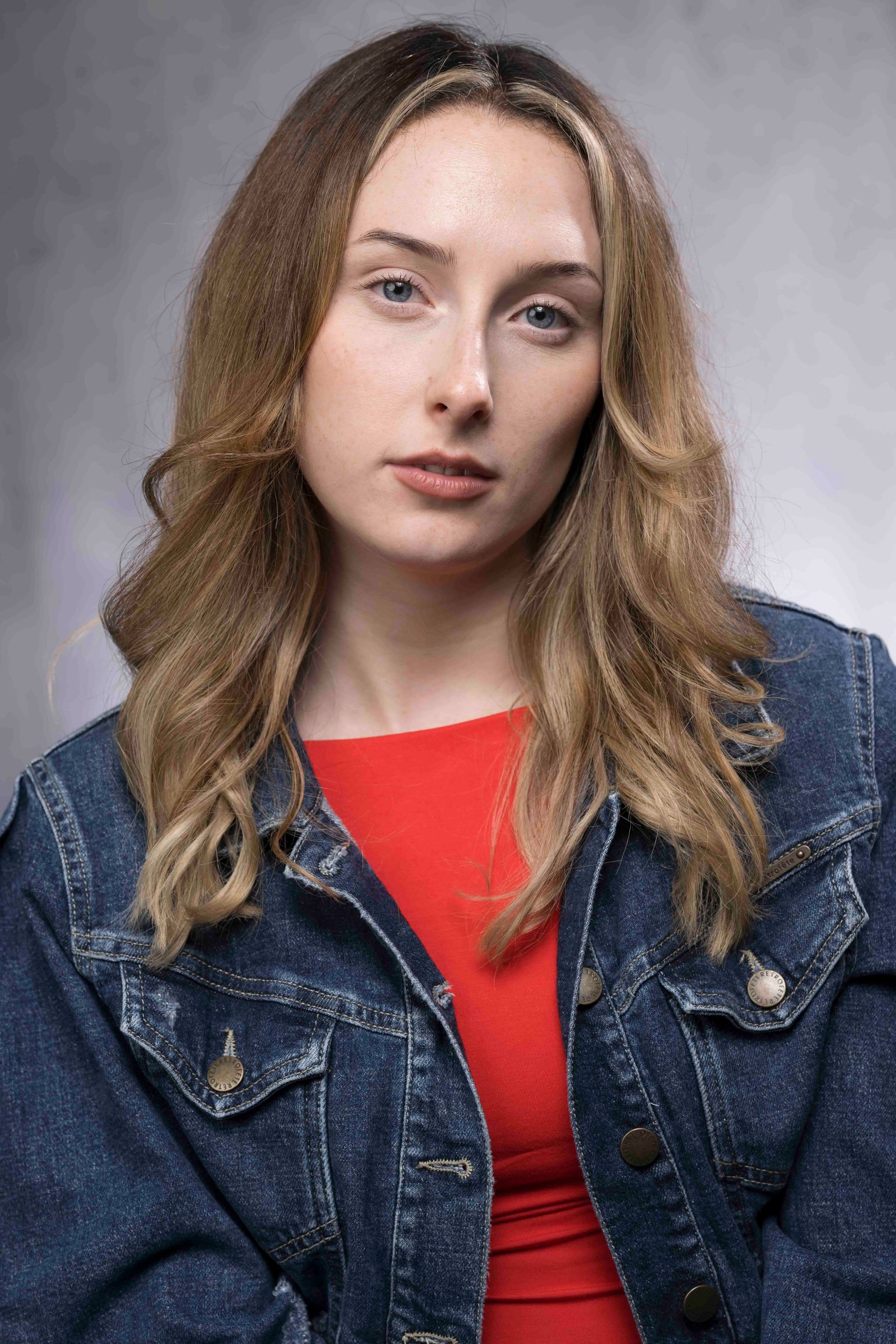
Before a director hears your voice or watches you move, they have usually seen your face at the size of a postage stamp. That is the real job of headshots for theatre and screen actors: to let the casting team see you clearly — not your outfit, not the lighting, not the retouching — and to make them want to meet the person in the frame.
Stage and screen ask slightly different things of that picture, and most advice online leans towards screen. So this guide gives stage actors the fuller treatment: where a theatre headshot actually ends up, what a panel reads from it, and how to plan one session at our Leeds studio that covers both worlds without paying for two shoots.

Theatre: the headshot sells the seat
In theatre, headshots are used for promotional purposes — featured in programmes, posters and marketing materials to attract audiences and generate interest in a production. A compelling headshot gives potential theatregoers a glimpse of the character you play, and a strong cast photo can do real work for a poster before anyone has bought a ticket.
Where a stage actor’s headshot actually ends up
A screen actor’s headshot mostly lives on a casting platform. A stage actor’s travels much further, and it helps to know the route before you book.
- Your casting profile and your agent’s roster page — a small thumbnail, judged in a second or two.
- The audition table — a printed 10×8 with your CV on the back is still asked for at plenty of open calls and drama school auditions.
- The programme and the theatre’s cast page — small, sometimes printed in black and white, sitting alongside the rest of the company.
- Foyer boards and press releases — much larger, in print, where soft focus and heavy retouching show up straight away.
- Showcase brochures — a whole graduating year, all trimmed to the same crop by someone else.
That is five sizes and two media from one photograph. It is why we keep stage headshots simple: a clean background, light that shapes the face without adding drama of its own, and enough air around the head to survive being trimmed by a designer you will never meet. Our guide to the best actor headshot backgrounds explains which backdrops hold up across all of them.
Check it in black and white
Colour is the standard for UK casting now, and colour is what we deliver. Plenty of programmes are still printed in mono, though, and a shot that leans on colour contrast — a red jumper against a green backdrop, say — can go flat in greyscale. Because we shoot tethered into Capture One, we can flip a frame to black and white on the big screen during the session and see whether your face still carries it. It takes a few seconds and saves an awkward surprise on press night.

Screen: the headshot gets the meeting
For screen actors, headshots matter even more. In film and TV, casting decisions often start with a quick glance at a headshot before anyone reads further. Casting directors and producers are looking for specific qualities that align with their vision for a role, so your headshot needs to convey the right look, energy and consistency with the character you’re going up for.

How headshots for theatre and screen actors differ
The difference is smaller than people expect, and it is mostly about intention rather than kit. It is the same face, the same light and the same lens — what changes is how much you give the camera.
What a theatre panel tends to look for
- Presence. A touch more openness and energy in the eyes. Stage work is about reaching the back row, and a headshot with nothing going on behind the eyes suggests the opposite.
- A wider playing range. The audience is rows away, so theatre casting often thinks in broader age brackets and types than screen does. A neutral, unfussy look lets a director imagine several parts on you, which matters for rep seasons and ensemble work.
- An honest likeness. You will usually be in the room with the panel within days. If the photo and the person disagree, the audition starts on the back foot.
What screen casting tends to look for
- Stillness. Closer, quieter and less pushed. The camera catches anything performed, and so does a casting director looking at a close crop.
- Specificity. Screen casts to type more tightly, so the shot should sit clearly in one of your lanes. Nicole’s guide to understanding your casting type is the place to start if you are not sure what yours are.
In practice that is one session with two intentions. We shoot the quieter screen frames first while you settle, then open things up for the stage look — a small lift in posture and eye-line does most of it. Our list of actor headshot poses to ask for shows how little needs to change between the two.
Practical advice for stage actors
Musical theatre, panto and ensemble performers
If you sing and dance as well as act, your headshot still has one job: your face, as it looks on a normal good day. Save the stage make-up for the stage. Heavy contouring and a strong lip read oddly under close studio light and make it harder for a panel to picture you in anything else.
Some musical theatre and dance calls also ask for a full-length or movement shot alongside the headshot. Check the brief before you book and tell us, because it changes how we set the room up. It is also worth thinking about timing — panto and Christmas show casting across Yorkshire tends to happen well before autumn, so a spring refresh puts you ahead of the queue rather than in it.
Drama school auditions and graduate showcases
For a drama school application you do not need a full portfolio. You need one clear, natural photograph that looks like the person who will walk through the door, and the LinkedIn Express session at £95 is usually enough for that.
Graduating is different. Your showcase brochure, your first casting profile and your letters to agents all go out within weeks of each other, and they should all carry the same main image so that people start to recognise you. Ask your course what crop and orientation the brochure needs before the shoot. It is far easier to frame for it on the day than to rescue it afterwards.
Youth and community theatre
If you are in a youth theatre company or auditioning for your first big musical, the same rule applies with less pressure: one honest, well-lit photograph that looks like you this term. Faces change quickly between 14 and 19, so expect to update more often than an adult would — our guide on when to update your actor headshots gives the signs to watch for.
Under-18s come along with a parent or guardian, make-up stays minimal, and hair is worn the way you would normally wear it to an audition. Nicole’s piece on headshots for child actors covers the rest, including what parents should expect on the day.
Taking your headshot into the audition room
The audition brief outranks everything, including us. If it asks for a printed headshot and CV, bring a 10×8 with the CV fixed to the back and trimmed to the same size — we supply high-resolution files that print cleanly at that scale. If it asks for a digital submission, follow the naming and sizing in our guide on how to submit actor headshots.
Then turn up looking like the photograph. Same hair length and colour, similar facial hair, glasses on if they are on in the shot. The clothes advice is the same for the headshot and the audition, and for the same reason: plain, fitted, comfortable, nothing with a logo. The outfit’s job is to disappear so the panel watches your face. Ocean Theatre Company’s guide to the audition dress code gives three quick rehearsal tests for your outfit, plus a packing list for dance calls, and it is well worth ten minutes before the day.
More first rounds for theatre are now run as self-tapes too. If your flat has no clean wall and a neighbour with a drill, you can hire the studio for a couple of hours — our post on finding the right space for self-tapes shows how one Leeds actor did a tape and a fresh headshot in the same afternoon.
A stage actor’s checklist before you book
- Decide your two lanes — usually a neutral stage look and a warmer commercial or screen look.
- Bring two or three plain tops, including one mid-tone that will hold up in black and white.
- Wear your hair as you would to an audition, and leave the stage make-up at home.
- Tell us where the image is going — casting profile, programme, showcase brochure — so we can frame for the tightest crop.
- Sleep, drink water and arrive ten minutes early. There is a brew waiting. Our guide on how to prep for an actor headshot shoot has the full run-through.
- Afterwards, get a second opinion from the right people before you choose. Who to ask for headshot feedback explains why your mum is not on the list.
Both need to be memorable
Casting directors see a large number of actors every day, and a memorable headshot helps you stand out from the crowd. It becomes a visual reminder of your audition, helping them recall your performance and potential. In a competitive industry, that advantage is worth having. This is why a professional photographer who specialises in actor headshots understands lighting, composition and how to capture your individuality, not just a technically correct photograph.

Alongside a standout headshot, keep your CV current — training, experience and notable credits, kept accurate as your work builds. Combined with a strong headshot, a well-prepared CV makes a real impact on casting professionals reviewing your submission.
Headshots are a critical tool for theatre and screen actors: a visual representation of your talent, personality and casting potential. A professional headshot helps you stand out, leaves a lasting impression, and opens doors to opportunities you’d otherwise miss on the thumbnail alone.

More guides for actors and performers
If this was useful, these go deeper on the parts we have only touched on here.
- Casting headshot mistakes — the common ones we see, and how to avoid them.
- Actor headshot and the hustle — Nicole on agents, connections and getting seen.
- What actually changed in my new actor headshots — a working actor’s before and after.
- Inside an actor headshot session — how a real shoot ran, from consultation to final selects.
Frequently Asked Questions
Do I need different headshots for theatre and screen?
Not necessarily different shoots, but different looks from one. Stage headshots benefit from a touch more presence and projection; screen wants something subtler and closer, since the camera catches anything pushed. Our guide to how many headshots actors need covers how to plan the set.
Do theatre headshots need to be black and white?
No. Colour is the standard for UK casting and it is what we deliver. If a programme or brochure needs mono, it is converted from your colour file, which is why we check during the session that your shot still works in greyscale.
Which session should I book?
The Quick-Fire Spotlight at £150 gives two or three looks and five retouched images in 40 minutes, enough for a stage and a screen option. The In-Depth Portrait at £200 gives five looks and ten images over an hour if you want commercial covered as well.
What should I wear?
Plain, solid colours without logos or busy patterns. Our guide to what to wear for headshots has the detail.
How long until I get the images?
Your gallery is supplied the same day and retouched selects are typically with you within 48 hours.
Where is the studio and how do I book?
Dock Street Studio, Unit 9, 30–38 Dock Street, Leeds LS10 1JF — central Leeds near Leeds Dock, a short walk from the train station, with parking on site. Book online or call and we’ll talk your casting through first.
Book your actor headshots in Leeds
Poster shot, programme page or screen test — come and get the headshot that puts you in the room. Book online, email hello@dockstreetstudioleeds.co.uk, or call 0113 4400102. Session details are on the headshot photography page, and you can read what other actors and performers have said on our reviews page.
Written by Mark Wheelwright
Commercial photographer & studio owner, Leeds | ISO Photographic Ltd
Dock Street Studio, Unit 9, 30–38 Dock Street, Leeds LS10 1JF
18+ years’ experience | 900+ projects | 300+ five-star reviews | 1M+ shutter count
dockstreetstudioleeds.co.uk
Shot, written and built by the Dock Street team
Every guide on this blog comes from the team at Dock Street Studio — Mark behind the camera with 18+ years' experience, Nicole on styling and lighting, Beya on video and bookings and Austin keeping the site fast and findable. If you'd rather have us do it than read about it, book a session or explore our photography services in Leeds.