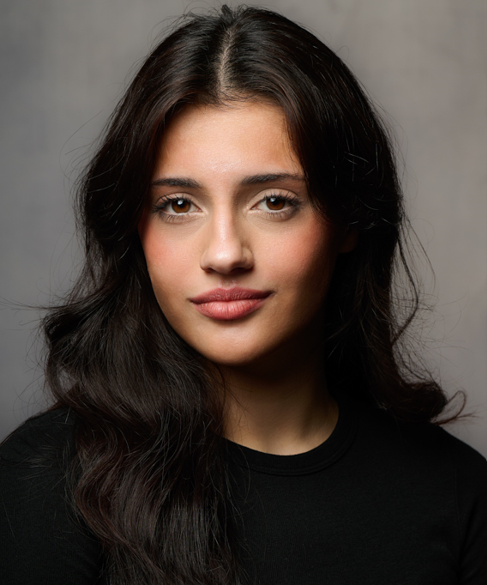
In a headshot studio, faces aren’t judged the way most people expect. They aren’t measured against ideals of attractiveness or polish. They’re read.
The photographer pays attention to how a face arrives in the frame. Whether the eyes engage before the mouth does. Whether the expression looks chosen or incidental. Whether the face seems to be doing something on purpose.
This is what he thinks of as face literacy: the ability to understand what a face communicates when it’s reduced to a single image.
A headshot strips context away. There’s no voice, no movement, no chance to clarify intent. The face has to do all the work on its own. In that setting, small signals carry a lot of weight.
Most clients focus on features. They ask about angles, lighting, which side works better. The photographer watches something else. He watches tension. He watches effort. He watches how much the face is managing itself.
Faces that are over-managed tend to close in on themselves. The eyes tighten. The mouth holds a position too long. The result isn’t stiffness so much as distance. The image feels careful. It reads as controlled; harder to trust.
Faces that read well are usually quieter. The eyes are engaged without staring. The jaw isn’t braced. The face looks like it belongs to the body it’s attached to.
Posture often decides this before expression ever does. When shoulders are tight or weight is pitched forward, the face follows. When the body finds balance, the face settles. The change is subtle, but it shows.
This matters more than people realize once the image leaves the studio.
.webp)
On LinkedIn, a headshot is often the first point of contact. Before someone reads a headline or a job title, they register the face. They decide, quickly, whether the person looks approachable, credible, or difficult to read. A face that feels tense or overly composed can create hesitation. A face that looks present and at ease tends to invite a click.
In acting, the margin is even thinner. Casting doesn’t have time to decode an image. They’re not looking for performance in a headshot. They’re looking for access. A face that feels available suggests range. A face that feels guarded suggests limits.
Clients often ask for a neutral headshot. What they usually mean is something safe. What they don’t realize is that neutrality without engagement rarely reads as neutral. It reads as closed or unsure.
The most effective headshots tend to sit somewhere in between expression and stillness. Not smiling, not serious. Just attentive. The face looks like it would respond if spoken to.
It’s often asked why longer headshot sessions end in better results. It’s not necessarily having more options, but rather that the photographer has more time to wait for the moment when the face stops adjusting itself. When it stops checking how it’s coming across. That moment doesn’t look dramatic. The face doesn’t change much. It just becomes readable.
Those are the images people end up using. Not because they look impressive, but because they make sense in the places they’re meant to live.
A good headshot doesn’t explain who someone is. It just makes the introduction easier.
That’s face literacy

